The automotive industry has evolved significantly over the last few decades, becoming a marvel of high-tech engineering and global supply chains. However, as vehicles become more complex, the cost of maintaining them has skyrocketed. For many car owners, hobbyists, and environmentalists, the solution to these rising costs and the growing concern over industrial waste isn’t found in a sleek showroom or a specialized dealership. Instead, it is found in the rows of weathered vehicles at a local junk yard.
Often misunderstood as mere graveyards for rusted metal, modern salvage yards are actually sophisticated hubs of recycling, commerce, and mechanical treasure hunting. Understanding the benefits of these facilities can change the way you look at vehicle maintenance and environmental stewardship.
Unbeatable Cost Savings
The most immediate and tangible benefit of visiting a local junk yard is the financial savings. New automotive parts, especially those sourced directly from the manufacturer (OEM parts), carry a heavy price tag. When a vehicle requires a non-wearable component—such as a door handle, a side-view mirror, or a trunk lid—buying new can often cost hundreds of dollars more than necessary.
Salvage yards allow consumers to harvest these parts from vehicles that may have been decommissioned due to engine failure or rear-end collisions but still possess perfectly functional body panels, interior trim, and electronic components. In many cases, you can find the exact part you need for a fraction of the retail price. For those driving older models where parts are no longer in production, the salvage yard isn’t just a cheaper option; it is often the only option for keeping a vintage or discontinued vehicle on the road.
Environmental Responsibility and Sustainability
In an era where “reduce, reuse, recycle” has become a global mantra, the salvage industry stands as one of the most effective examples of a circular economy. When a car is sent to a salvage yard, it isn’t simply left to rot. The process begins with the careful draining of hazardous fluids, such as engine oil, coolant, and brake fluid, preventing them from leaching into the soil or groundwater.
Beyond fluid management, the act of reusing parts significantly lowers the carbon footprint associated with manufacturing new ones. Producing a new alternator or starter motor requires raw material extraction, high-energy smelting, and international shipping. By opting for a used part from a local junk yard, you are extending the lifecycle of existing materials and reducing the demand for new industrial production. Furthermore, once a vehicle has been picked clean of its useful components, the remaining metal shell is crushed and sold as scrap to be melted down and repurposed, ensuring that very little of the vehicle ends up in a landfill.
Finding Rare and Hard-to-Source Parts
For restoration enthusiasts and DIY mechanics, the salvage yard is a field of possibilities. If you are restoring a classic car or a specific trim level of a 90s truck, finding specific interior plastics or original dashboard gauges can be a nightmare online. Online marketplaces often charge premium “collector” prices and high shipping fees for bulky items.
Browsing a local yard gives you the opportunity to inspect the part in person before you buy. You can verify the color match, check for cracks, and ensure the mounting brackets are intact. There is also a certain level of mechanical education involved; by pulling the part yourself, you learn exactly how it is installed, which makes the repair process on your own vehicle much smoother.
Supporting the Local Economy
Choosing to do business with a salvage facility helps keep money within your community. These businesses provide jobs for mechanics, inventory managers, and customer service staff. They also provide a vital service to local repair shops that may need affordable components to keep their customers’ repair bills manageable. Unlike large online retailers where profits are distributed globally, the revenue generated at a local yard stays nearby, supporting the local tax base and contributing to the economic health of the region.
A Resource for Every Driver
You don’t need to be a professional mechanic to reap the rewards of a salvage yard. Many modern yards offer “Full-Service” options where their staff pulls the parts for you, though “U-Pull-It” style yards remain popular for those who enjoy the hands-on experience. Beyond parts, these yards are an excellent resource for those looking to dispose of an old, non-running vehicle. Most will offer a fair price based on the weight of the scrap metal and the value of the remaining parts, often providing towing services to haul the vehicle away.
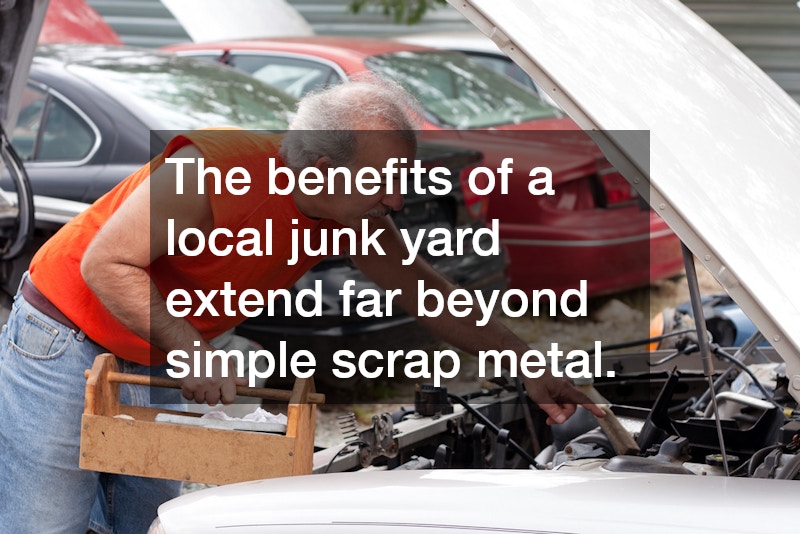
The benefits of a local junk yard extend far beyond simple scrap metal. They are essential institutions that bridge the gap between affordability and sustainability. By providing a massive inventory of affordable parts, they enable people from all walks of life to maintain their vehicles without breaking the bank. Simultaneously, they perform a massive environmental service by recycling tons of metal and hazardous materials every year.
The next time you are faced with a daunting repair bill or a missing piece of trim that seems impossible to find, consider taking a trip to your nearest salvage facility. You might be surprised at the high-quality components waiting to be rediscovered. Embracing the salvage yard isn’t just a smart financial move; it’s a commitment to a more sustainable and resourceful way of living.
About the Author